Today is Thanksgiving Monday. Somewhere in Toronto yesterday, someone poured an entire roasting pan of turkey grease down the kitchen sink — and by Wednesday, we’ll be unclogging it. Holiday grease is our #1 Thanksgiving-weekend plumbing call, every single year.
Here’s what actually happens when grease goes down the drain, the 30-second habit that prevents it, and what to do if your sink is already draining slow.
What grease does inside your pipes
Grease goes down liquid and comes back as a problem. Within a few feet of your sink it cools, coats the inside of the pipe, and hardens into a waxy layer. Every meal after that adds another coat. Food particles, coffee grounds, and soap scum stick to it. What you get is a home-scale version of the fatbergs the City of Toronto just showed reporters at the Strachan Pumping Station — a pipe choked from the inside out.
The cruel part: it doesn’t clog today. It clogs three weeks from today, long after you’ve forgotten the turkey.
The 30-second habit: jar it, don’t pour it
- Let the grease cool in the pan — never pour it hot.
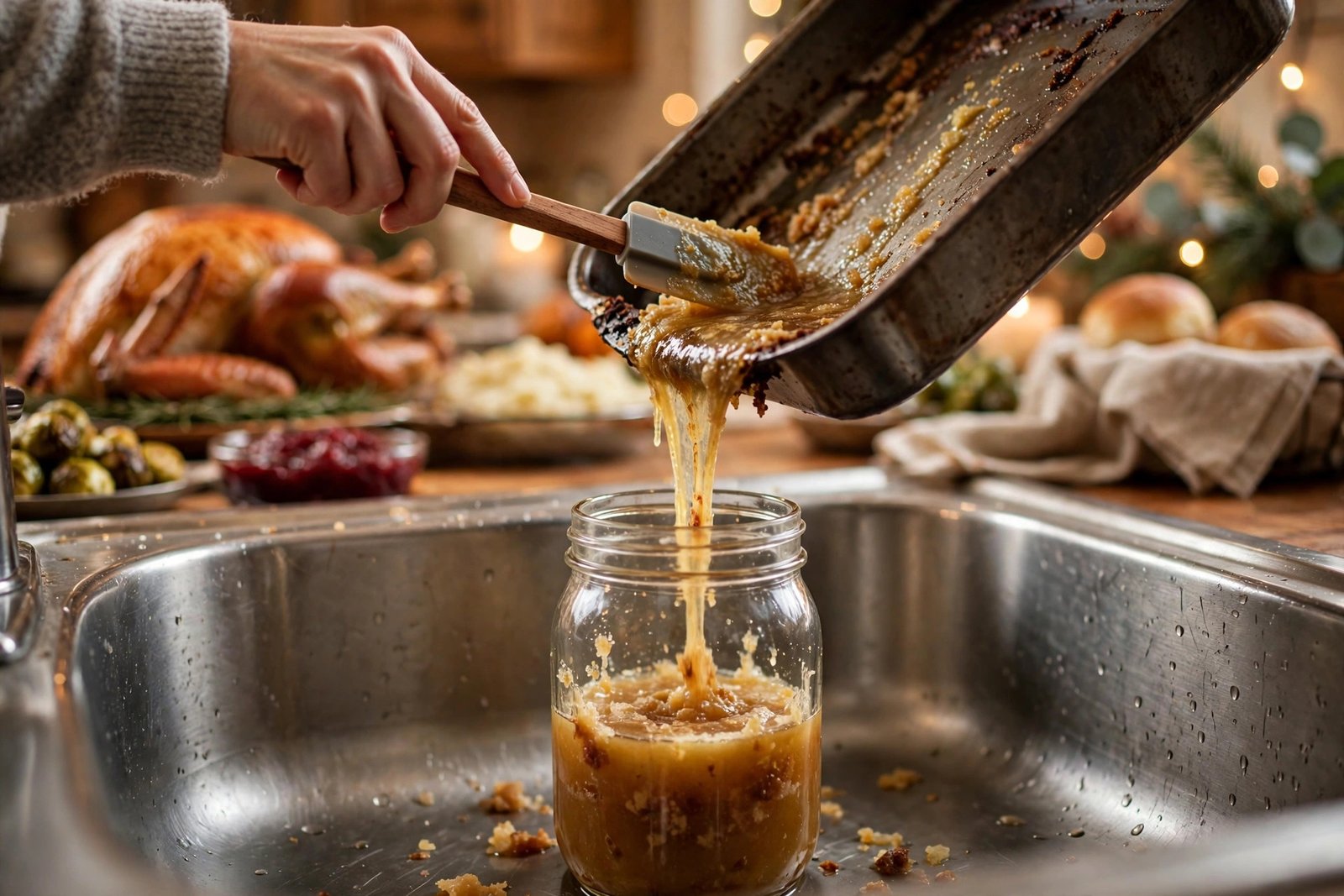
- Pour it into a jar, can, or container (like the photo above).
- Wipe the pan with a paper towel before washing.
- Once the jar is full and solid, it goes in the garbage — or a city cooking-oil drop-off.
That’s it. Thirty seconds, zero plumber bills.
The boiling-water myth
“Just run hot water with it” is the most expensive folk wisdom in plumbing. Hot water melts the grease — and carries it deeper into your pipes, where it cools and hardens somewhere you can’t reach. You’ve moved the clog, not removed it.
If the sink is already slow
Try a plunger with a few inches of standing water — ten firm pumps. If that doesn’t clear it, stop: chemical drain cleaners corrode pipes and rarely beat a grease clog anyway. That’s a job for a snake or a hydro-jet, and over a holiday weekend, Danielle answers 24/7 — nights, weekends, Thanksgiving Monday included.
Call (289) 233-7221 — 24/7 Holiday Dispatch
Grease questions, answered
Can I pour grease down the drain if I run hot water with it?
No. Hot water just pushes the grease deeper into your pipes, where it cools, hardens, and forms a clog you can’t reach. Jar it instead.
What’s the right way to dispose of cooking oil in Toronto?
Let it cool, pour it into a sealed container, and put it in the garbage — or take larger quantities to a City drop-off depot. Never down any drain, including the toilet.
My kitchen sink is already draining slowly after the weekend. What now?
Try a plunger first. If the slowness persists, the grease has likely hardened further down the line — that’s a snaking or hydro-jetting job. Call before it becomes a full backup.
Does home insurance cover grease-clog damage?
Usually not for the clog itself — insurers treat it as a maintenance issue. But resulting water damage from a backup may be covered depending on your policy. Prevention is cheaper than either.
Related: Drain Snaking & Repairs · Camera Inspection Service · Contact Us